
09 Jun Study: People with epilepsy have many unmet psychosocial and everyday needs
Many people living with epilepsy around the world struggle with fear, stigma, poor access to services, and a lack of clear information and support, shows a recent study published in Epilepsia.
The study calls for better education, more support for caregivers, and improvements across health, work, school, and transport systems. The Global Epilepsy Needs Study (GENS), drafted by the International Bureau for Epilepsy (IBE), also shows the need for more research to understand and respond to the real-life needs of people most impacted by epilepsy.
IBE has also launched a new Policy Advocacy Report at the 79th World Health Assembly in Geneva, based on the results of GENS. This report translates lived experience insights and global evidence into practical recommendations aimed at strengthening implementation of the World Health Organization’s Intersectoral Global Action Plan on Epilepsy and Other Neurological Disorders (IGAP) 2022–2031, IBE announced.
Grounded in lived experience and shaped through global collaboration, GENS aims to inform more person-centred care, stronger advocacy, improved support services, and policies that reflect the realities of everyday life with epilepsy, the organization stated.
“Policies, plans, and programmes to address epilepsy as a public health priority are ultimately pointless unless they address the real, everyday unmet needs of people living with the condition,” said Dr Francesca Sofia, President of IBE.
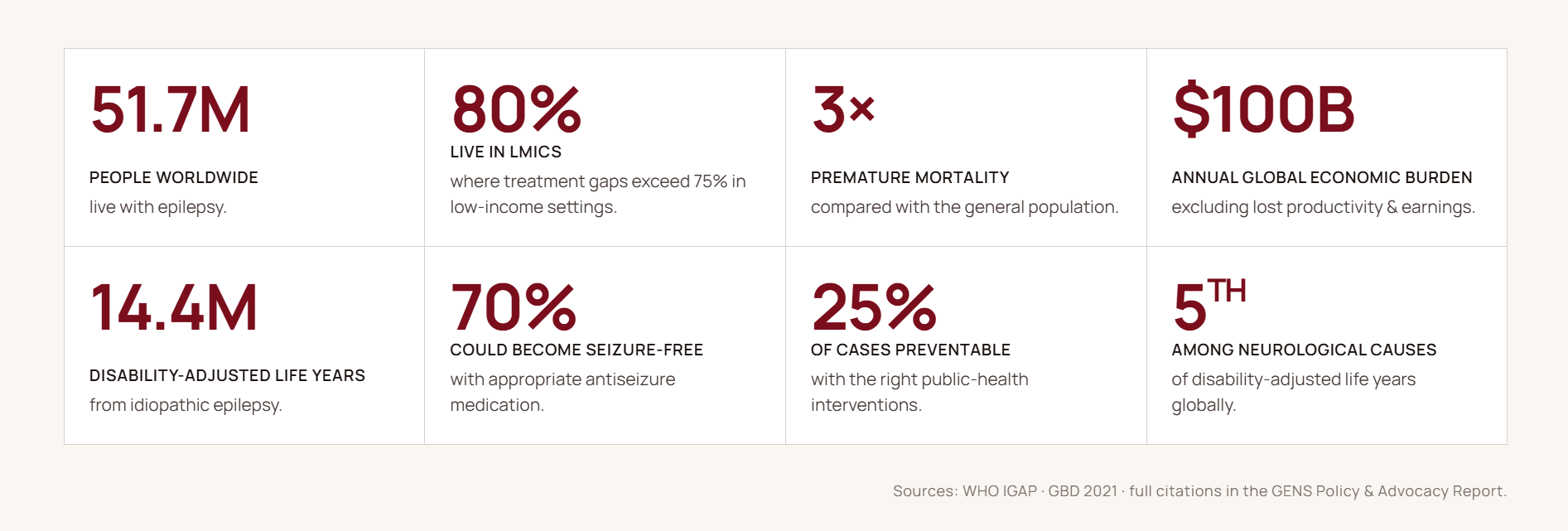
The report notes that epilepsy is the world’s most common serious chronic neurological condition, yet the lived realities of more than 50 million people remain under-measured in global health policy.
While epilepsy research has largely focused on medical management and clinical outcomes, less attention has been given to the unmet psychosocial and everyday needs of people with epilepsy, particularly in low- and middle-income countries, according to the report.
IBE surveyed more than 5,000 participants and conducted 75 in-depth interviews in 15 countries. Thus, GENS is the largest mixed-methods exploration of the psychosocial and everyday needs of people living with epilepsy — beyond seizures.