06 Jul European caregivers face decades-long emotional and social burden in Dravet Syndrome
Caring for a person with Dravet Syndrome places a long-term, multidimensional, and often overwhelming burden on families across Europe, according to data from the QoL4DRAVET study, which was published in the prestigious journal Epilepsy & Behavior.
The findings confirm that caregiver strain does not diminish over time; instead, it evolves and persists as children grow into adolescence and adulthood. Emotional well-being, autonomy, and social participation are the domains most severely affected.
At the heart of the publication lies a simple truth: families caring for individuals with Dravet Syndrome shoulder a lifelong responsibility that profoundly shapes their daily lives.
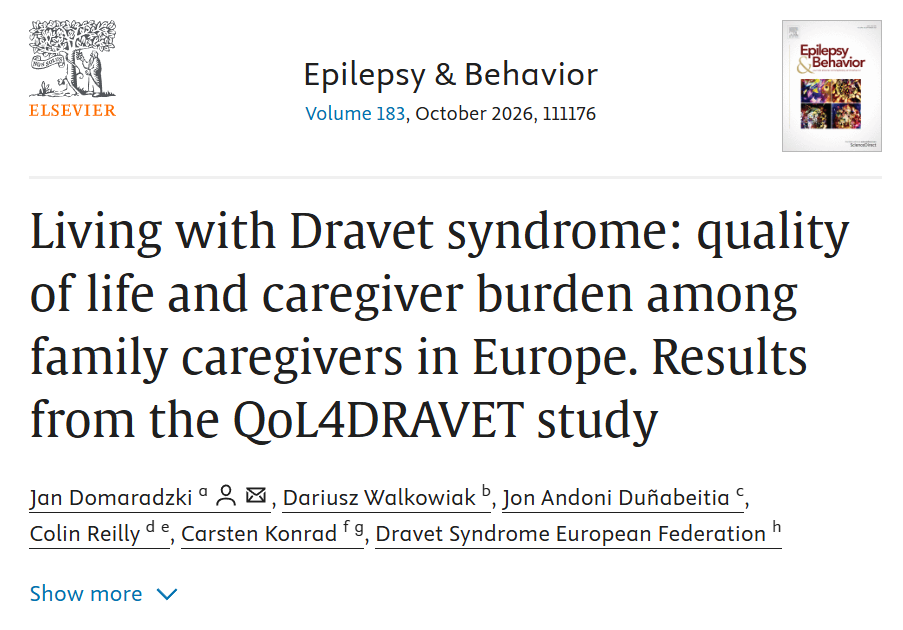
The article, titled “Living with Dravet syndrome: quality of life and caregiver burden among family caregivers in Europe. Results from the QoL4DRAVET study”, provides one of the most detailed pictures to date of what it means to care for a person with Dravet Syndrome over the long term, and is based on the results of the study developed in close cooperation between the Dravet Syndrome European Federation and a scientific team led by Prof. Jon Andoni Duñabeitia at Universidad Nebrija, Madrid. We extend our sincere gratitude to all caregivers who participated in the study and shared their experiences, and the researchers who helped process the data and drafted conclusions.
Key findings: emotional strain, reduced autonomy, and cross-country disparities
A burden that lasts decades
Although Dravet Syndrome is typically diagnosed early – median age at diagnosis was 1.3 years – the majority of individuals represented in the study were adolescents or adults. This confirms that caregiving is not a short-term crisis but a sustained, lifelong commitment.
Caregivers reported “pronounced impairments in emotional well-being, sleep, fatigue, and stress, while physical functioning was relatively preserved.” Daily life is shaped by ongoing seizure activity, complex treatment regimens, frequent need for rescue medication, and the continuous management of neurodevelopmental comorbidities such as behavioural, motor, cognitive, and communication difficulties.
Gender differences in caregiver experience
Women reported significantly poorer emotional well-being, lower autonomy, and reduced social satisfaction compared to men. These differences reflect longstanding gendered caregiving roles and highlight the need for targeted support strategies.
Not all European countries experience the burden equally
The study identified meaningful cross-country variation – caregivers in Poland reported the lowest levels of emotional well-being and autonomy, while families in the Netherlands and Germany reported more favourable profiles. These disparities underscore how national healthcare systems, access to specialised care, and social support structures shape the lived experience of caregiving.
Work and economic life heavily affected
Only 26.4% of caregivers were employed full-time, while 25.6% identified as full-time caregivers. Work restrictions, reduced productivity, and career interruptions are common, adding an economic dimension to the emotional and social burden.
About the study: a patient-oriented, multinational effort led by DSEF
The QoL4DRAVET study is part of the QoL4Dravet – Measuring Quality of Life in Dravet Syndrome initiative coordinated by the Dravet Syndrome European Federation.
Study design and sample:
- 379 caregivers from 14 European countries
- anonymous, self-administered online questionnaire
- cross-sectional, observational design
In order to assess the quality of life of Dravet caregivers, the research team, together with DSEF and caregiver representatives, developed the QoL4Dravet questionnaire, covering multiple areas, such as physical health, emotional well-being, social functioning, daily functioning and autonomy, economic impact, access to healthcare and support services.
The questionnaire was reviewed by experts, piloted in Spain and Italy, and translated into multiple languages to ensure cultural relevance.
Although exploratory, the instrument demonstrated strong internal consistency.
Why this publication matters
Publishing this study in Epilepsy & Behavior gives international visibility to the lived reality of Dravet families. It provides clinicians, policymakers, and support organisations with robust evidence that caregiving in Dravet syndrome is:
- long-term, often spanning decades
- emotionally and socially demanding
- gendered, with disproportionate burden on women
- shaped by national context, requiring policy-level interventions
For families, the study offers validation: their experiences are shared across Europe and are now documented in a high-impact scientific journal.
A message of gratitude
The Dravet Syndrome European Federation warmly thanks every caregiver who contributed to this study. Your insights, honesty, and time make it possible to advocate for better care pathways, stronger support systems, and more informed policies across Europe.